Conferences & Networking
The SAS regularly sponsors conferences, workshops, and conference sessions. If you are planning an event relevant to the goals of the society, please get in touch with the VP of Intersociety Relations so that we can explore a partnership. If you're a student SAS member interested in promoting professional fellowship among your peers, check out the Student Ambassador program and reach out to our VP for Membership Development to learn more.
- Braden Cordivari
The Journal of Archaeological Science and SAS are launching a new prize to celebrate the 50th anniversary of SAS. Find out more about eligibility and nominations here, and please spread the word!
- Braden Cordivari
The Society for Archaeological Sciences is launching a community-run portal for listing employment opportunities in archaeological science. We invite anyone to submit relevant listings at all levels from PhD positions to professorships by filling out this form.
The results of the form will be freely available on the SAS website, through a linked spreadsheet. This service relies on community submissions, so it is neither comprehensive nor official, and anyone can add listings.
The Society for Archaeological Sciences does not verify, endorse, or take responsibility for the content of any listings submitted through this form. All information is provided as received, and SAS is not liable for any errors, omissions, or inaccuracies. Users are responsible for checking details such as submission dates in the original post link. We hope that people will fill out the form as part of advertising new positions and encourage their colleagues to do the same.
Please direct any questions to the SAS VP for Member Communications, Braden Cordivari (
- Braden Cordivari
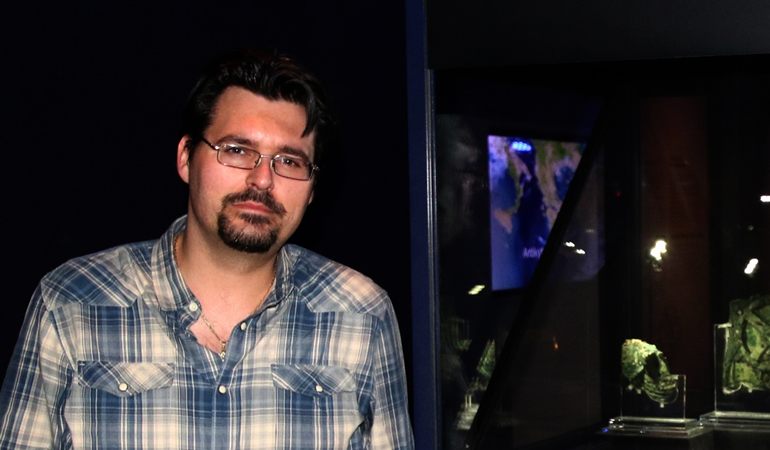
Congratulations to Aristeidis Voulgaris (Thessaloniki City, Directorate Culture and Tourism), the winner of the Hellenic Society for Archaeometry-SAS Travel Award! This award will support travel to the 9th Symposium of the Hellenic Society for Archaeometry, which will be held this year in Patras, Greece (5-8 November 2025). Aristeidis is the team leader for "The Functional Reconstruction of Antikythera Mechanism - The FRAMe Project". At the HSA Symposium, he will present results of an experimental study on the effects of seawater on the corrosion of the bronze components of the Antikythera Mechanism. His work will show how the depositional environment has altered the dimensions of the mechanism, which in turn has implications for the reconstruction of its components. We look forward to following the next chapter of Aristeidis’ exciting work!
- Braden Cordivari
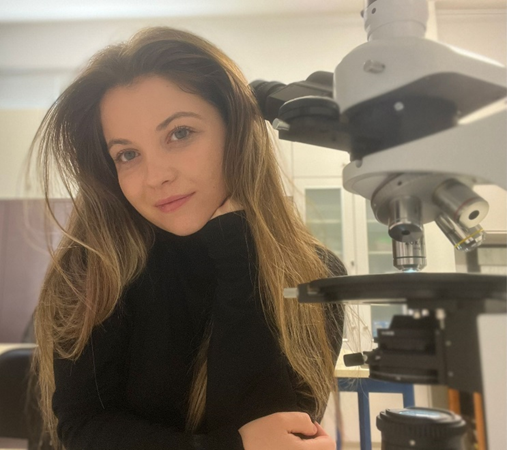
Congratulations to Zofia Chomoncik, winner of the SAS Travel Award for Young Researchers in Archaeometry 2025, which took place October 14-17 2025 in Budapest! Zofia is a master’s student at Jagiellonian University in Kraków. Her presentation “Unchanging tastes: Material choices in Hellenistic and Roman storage vessels from Nea Paphos” investigated technological decisions made by potters at Nea Paphos, Cyprus. She focused on storage vessels—Greek pithoi and Roman dolia. Based on petrographic analysis of ceramic fragments excavated by the Polish Archaeological Mission (Maloutena and Agora), Zofia examined how material choices reflected both intentional technological practice and local geological conditions. Contrary to expectations of diverse clay usage, her study revealed a strong reliance on a single clay source, even when alternatives were available. She also explored the ambiguous role of mudstone as the dominant inclusion, highlighting the balance between environmental constraints, tradition, and innovation in ancient pottery production. Congratulations, Zofia!
- Braden Cordivari
The SAS Student Ambassadors are organizing the “Synchrotron Radiation for Cultural Heritage Materials” webinar taking place on Wednesday, 3 December 2025 at 14:00 GMT.
This webinar will explore how synchrotron radiation contributes to the study of diverse cultural heritage materials, including ceramics, metals, pigments, and bones. Through selected case studies, we will show how synchrotron-based techniques, such as XRF, XAS, XRD, CT, offer unique insights into composition, microstructure, and alteration processes that are otherwise inaccessible with conventional methods.
Building on examples from ongoing research, the webinar will highlight how these analytical approaches help archaeologists, conservators, and heritage scientists answer key questions about technology, provenance, and preservation. The webinar also aims to open a dialogue between cultural heritage researchers and synchrotron beamline scientists, laying the groundwork for future interdisciplinary collaborations.
Part 1 of the series (3 December 2025 at 14:00 GMT) will focus on Synchrotron applications for ceramics and bones, and on Computed Tomography for Cultural Heritage materials.
Talk 1: Ceramics
Speaker: Carlo Marini (Beamline Group Leader, ALBA Synchrotron, Spain)
Talk 2: Bones
Speaker: Simone Lemmers (MSCA Research Fellow, Elettra Synchrotron, Italy) and Ilaria Carlomagno (Beamline Scientist, Elettra Synchrotron, Italy)
Talk 3: Computed Tomography
Speaker: Vincent Fernandez (Beamline Scientist, European Synchrotron Radiation Facility, ESRF, France)
To register, participants need to fill in this form.
https://forms.gle/kY2jc6MjFNbNrfCfA

- Braden Cordivari
The year 𝟮𝟬𝟮𝟲-𝟮𝟬𝟮𝟳 𝗺𝗮𝗿𝗸𝘀 𝘁𝗵𝗲 𝟱𝟬𝘁𝗵 𝗮𝗻𝗻𝗶𝘃𝗲𝗿𝘀𝗮𝗿𝘆 𝗼𝗳 𝘁𝗵𝗲 𝗦𝗼𝗰𝗶𝗲𝘁𝘆 𝗳𝗼𝗿 𝗔𝗿𝗰𝗵𝗮𝗲𝗼𝗹𝗼𝗴𝗶𝗰𝗮𝗹 𝗦𝗰𝗶𝗲𝗻𝗰𝗲𝘀! As one of the many ways we will mark the occasion, we are organizing 𝗮 𝘀𝗽𝗲𝗰𝗶𝗮𝗹 𝗶𝘀𝘀𝘂𝗲 𝗼𝗳 𝘁𝗵𝗲 𝗷𝗼𝘂𝗿𝗻𝗮𝗹 𝗔𝗿𝗰𝗵𝗮𝗲𝗼𝗺𝗲𝘁𝗿𝘆, in partnership with the Standing and Organizing Committees of the International Symposium on Archaeometry, to be held in Turin, Italy (May 18th-22nd, 2026).
For this special issue we are soliciting a series of essays, opinion pieces, and interviews on the state of the field of archaeometry and archaeological sciences, including discussions on all relevant associated subfields. We hope to receive thoughtful contributions on topics ranging from recent advances in the field, innovations in teaching and training, emerging trends in data management, the future role of AI in archaeometry, the state of research funding, publishing industries, novel methods for public and community engagement, and other topics as relevant. We especially encourage contributions from Aboriginal and descendant communities, and colleagues from underrepresented regions.
Contributions can be single or multi-authored, between 3,000-10,000 words, and need not necessarily include original case studies. We also encourage less-formal, Q&A style interviews as contributions. All contributions will undergo peer review and will appear online as they are published. 𝗦𝘂𝗯𝗺𝗶𝘀𝘀𝗶𝗼𝗻𝘀 𝘄𝗶𝗹𝗹 𝗯𝗲 𝗮𝗰𝗰𝗲𝗽𝘁𝗲𝗱 𝘁𝗵𝗿𝗼𝘂𝗴𝗵 𝘁𝗼 𝗗𝗲𝗰𝗲𝗺𝗯𝗲𝗿 𝟭𝟭𝘁𝗵, 𝟮𝟬𝟮𝟲.
We strongly encourage prospective contributors to 𝗿𝗲𝗮𝗰𝗵 𝗼𝘂𝘁 𝘁𝗼 𝗱𝗲𝘃𝗲𝗹𝗼𝗽 𝗰𝗼𝗻𝗰𝗲𝗽𝘁𝘀 𝘄𝗶𝘁𝗵 𝘁𝗵𝗲 𝗲𝗱𝗶𝘁𝗼𝗿𝗶𝗮𝗹 𝘁𝗲𝗮𝗺. To indicate your interest in contributing, please contact Managing Editor Brandi L. MacDonald (
Special Issue Editorial Team
Brandi L. MacDonald (Archaeometry JNL & SAS Executive)
Shadreck Chirikure (Archaeometry JNL)
Rachel Kulick (SAS Executive)
Monica Gulmini (ISA local organizer)
Alessandro Re (ISA local organizer)
Patrick Degryse (ISA Chairperson, standing committee)