SAS Social Media
The Society for Archaeological Sciences has a strong presence on multiple social media platforms. But what's the difference between the accounts?
Best for keeping up with official society announcements and curated archaeological science publications selected by our VP of Social Media: The SAS Facebook Page.
Best for sharing your own archaeo sci content with a relevant audience: The SAS Facebook Group
Not a Facebook user? We've got you covered. We duplicate our FB Page content on The SAS LinkedIn Page.
If you're into the whole brevity thing, follow SAS on X (formerly Twitter). Watch this space to find out if we move to an X competitor like Bluesky or Threads in the near future.
Looking for multimedia content including in-depth interviews with SAS award winners and Executive Board members, and anything else we think is interesting or useful? Subscribe to our YouTube channel today!
We're also on Instagram; stop what you're doing and check it out!
The SAS Social Media Team includes:
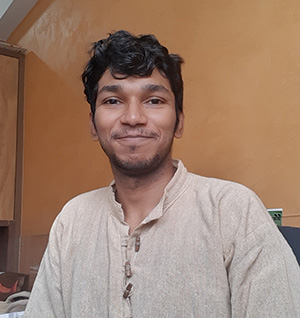
Abhishek Patil
SIES College of Arts, Science and Commerce
Abhishek is the SAS Volunteer for LinkedIn since October 2024 and is an MA graduate in history and Archaeology from the University of Mumbai and lecturer in economics, history and politics at the SIES College of Arts, Science and Commerce. Abhishek has conducted research on cult rituals and their impact on rural life and has also worked with coin collections and petroglyphs in India.
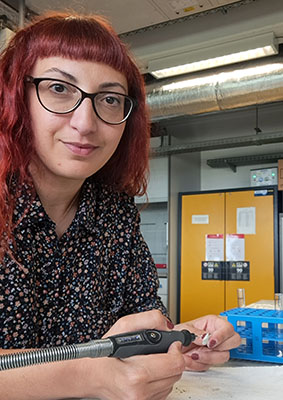
Anna Karligkioti
Vrije Universiteit Brussel
Anna is the SAS Facebook Volunteer since January 2025 and a past SAS Student Ambassador. She is currently a postdoctoral researcher and project coordinator for the “Low Countries: Crossroads of Europe from the Neolithic to the Late Middle Ages” (LOCO) project at Vrije Universiteit Brussel, exploring population movement through isotopic analyses in the low countries. She holds a Ph.D. in Archaeological Science specializing in Bioarchaeology from the Cyprus Institute. Before joining the VUB she was a postdoctoral research fellow for the Museum of Cycladic Art, examining health patterns and living conditions of the people inhabiting the islands of Naxos and Tinos during Classical Antiquity. Anna’s research explores past mobility and kinship patterns, social disparities and health inequality from Classical Antiquity to the Medieval times through the study of human skeletal remains. By examining diet, physiological and mechanical stress, activity patterns, population movement and biodistances, her work aims to uncover social divisions, investigate population dynamics, and challenge oversimplified views of the Greco-Roman world, giving voice to historically marginalized groups.
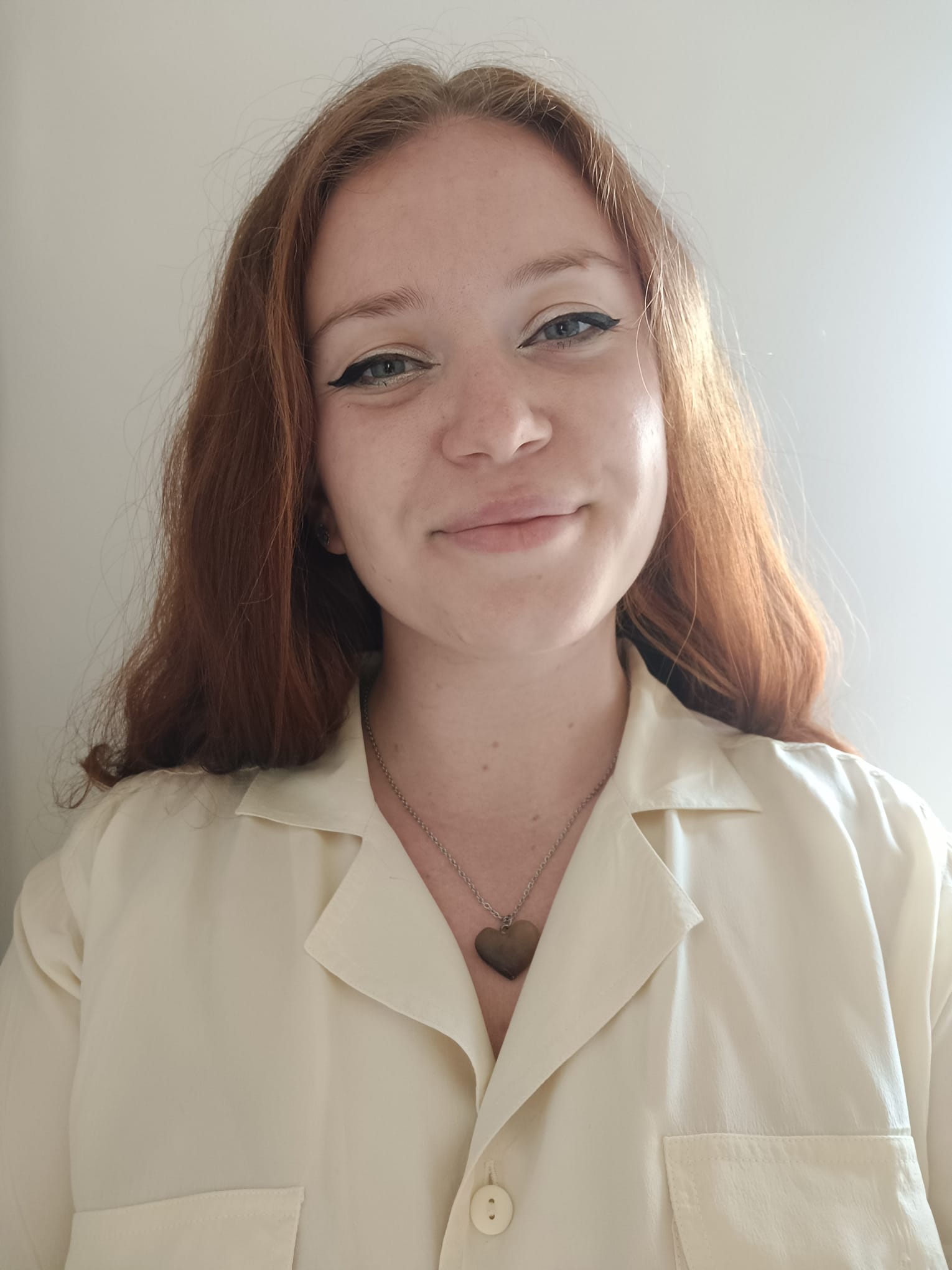
Kateryna D’Ayala
University of Turin
linkedin.com/in/kateryna-
Kateryna is the SAS Volunteer for Threads and X since September 2026. Kateryna is a PhD candidate at the "Technologies for Cultural Heritage (T4C)" programme at the University of Turin. Within the "Archaeometry and Analytical Chemistry in Art, History and Archaeology" (AMAMASA) research group, Kateryna investigates archaeological glass with a multi-analytical archaeometric approach, aiming to reconstruct the provenience of the materials and the technological process involved in their manufacture. She also has experience analysing Egyptian ceramics and working with laser cleaning techniques applied to wall paintings, with a particular focus on assessing the effectiveness of the treatment and any potential alterations.