It is with great pleasure that we share this year’s recipients of the Student and ECR Research Support Award! This year’s awardees are Agustina Vazquez Fiorani (Department of Anthropology, University of Notre Dame), Madison J. McCartin (University of California, Davis), and Miriam Vílchez-Suárez (University of Valladolid). We look forward to following the progress of their work! Congratulations to Agustina, Madison, and Miriam!
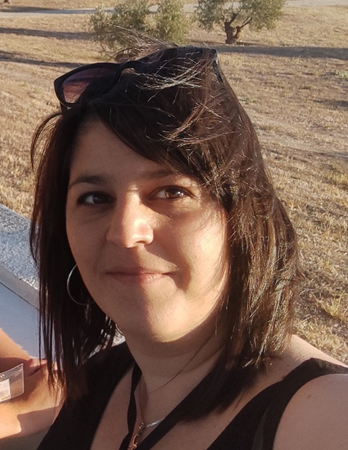
Agustina Vazquez Fiorani (Department of Anthropology, University of Notre Dame)
The study of ancient foodways—with a focus on the long-term relationships between daily decisions and socio-economic settings—offers a powerful lens for understanding how human groups faced past and present climatic crises. This project investigates the long-term crafting of enduring indigenous foodways in Argentina between 200 and 1476 CE, a period of radical transformations including increasing social differentiation, economic intensification, population aggregation, and climate change. SAS funding will cover my post-doc research at Notre Dame, where I integrate biomolecular (GC-MS), isotopic (GC-C-IRMS, EA-IRMS), and archaeological (ceramic analysis) methods to examine how ingrained food habits shaped human capacity to navigate increasingly complex and shifting circumstances. With SAS’s help, Agustina seek to contribute to worldwide anthropological debates on social complexity and climate change by applying scientifically robust methods that have not been widely employed in South American archaeology.
Agustina’s research broadly explores two enduring questions of anthropological archaeology: how did agropastoral lifestyles emerge, and under what conditions did social inequality take root? Drawing on social theory (relationality, practice, and materiality) alongside molecular, isotopic, experimental, and archaeological methods, she examines the interplay between social change, human-environment relations, and complexity in shaping long-term dietary patterns in the Southern Andes. Working in Argentina, she studies small-scale communities that inhabited the region during 200–1476 CE, a period marked by profound socioeconomic and climatic transformations. By reconstructing what people produced and ate, Agustina bridges methodological and theoretical approaches to reveal how cooking and eating actively shaped Andean communities' long-term resilience and adaptation.
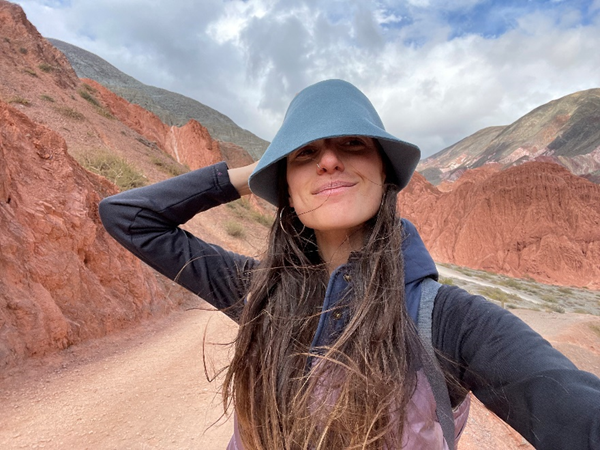
Madison J. McCartin (University of California, Davis)
“Who took the first bite? Investigations of hominin subsistence and paleoecology at Trou Al’Wesse (Belgium) via zooarchaeology and stable isotope analyses""
The Middle-Upper Paleolithic (MP-UP) transition represents a tipping point for biological and cultural evolution, characterized by early human dispersals and Neanderthal extinction. This project focuses on the MP-UP fauna from Trou Al’Wesse, a cave site in central Belgium dated to 54-36 ka cal BP. Zooarchaeological analyses will elucidate hominin subsistence practices, as well as the taphonomic history of the site. Carbon and nitrogen stable isotope analyses will establish an environmental baseline and clarify the ecological niche of key taxa, especially large carnivores whose niches overlapped with hominins. By generating new insights on hominin subsistence and paleoecology, this project aims to improve our understanding of the MP-UP transition in northwestern Europe.
Madison’s interests lie in the use of faunal remains to investigate hominin subsistence practices, paleoecology, and human-animal relationships during the Late Pleistocene (~100-10 ka BP), a period characterized by notable changes in hominin demography and global climate systems. Methodologically, she focuses on classic zooarchaeological techniques, namely taxonomic and taphonomic analyses, as well as biomolecular approaches including proteomics and stable isotope analysis. Her dissertation focuses on faunal remains from Middle-Upper Paleolithic sites in Spain, Belgium, and Mongolia to investigate the range and trajectory of subsistence practices at the time of the last Neanderthals and the earliest humans in Eurasia.
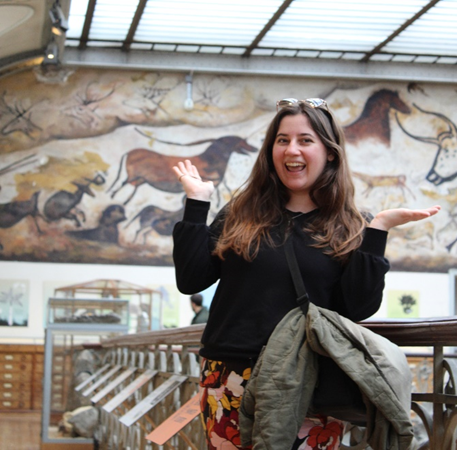
Miriam Vílchez-Suárez (University of Valladolid)
“ARGAR-CHILD. Uncovering gender roles of the childhood in the Argaric Bronze Age: Bioarchaeological insights from peptide-based sex analysis”
This research aims to come closer to an emic understanding of the gender system of Argaric Bronze Age societies in southeastern Iberia. The expression of gender identity at El Argar cemetery (Almería, Spain) rites was clearly a concern within the burial community, achieved by placing the body on the gendered side, in the appropriate orientation, and with gender-specific and typical grave goods. A comparison between this gendered funerary treatment with the estimation of biological sex based on the remains of buried non-adult individuals remains allows investigation of gender as the cultural classification and elaboration of sex-based differences.
Miriam’s research focuses on the bioarchaeological study of prehistoric populations from the Iberian Peninsula, particularly those from the Copper and Bronze Ages. Through the integrated analysis of human remains and funerary contexts, she investigates mortuary behaviour, social organization, and cultural practices in prehistoric communities. She is especially interested in the relationship between biological sex, gender identities, and funerary treatment, combining osteological, biomolecular, and archaeological approaches. Miriam’s work also explores childhood, non-masticatory dental wear, and ritual variability in collective burials, with the aim of better understanding social identities and lived experiences in prehistoric Iberia.