Andrew Michael Zipkin, Scientist, Eurofins EAG Laboratories, 103 Commerce Blvd, Liverpool, NY 13088; Adjunct Professor, School of Human Evolution and Social Change, Arizona State University, 900 S. Cady Mall, Tempe, AZ 85281, USA
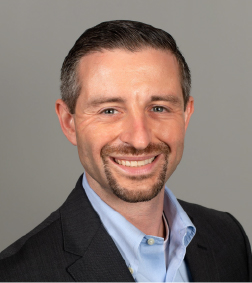
Andrew Zipkin is an archaeological scientist with over a decade of experience in elemental characterization, isotope geochemistry, compositional data analysis, provenience studies, geographic information science, and ethnoarchaeology. He currently works as an analytical chemist and materials scientist for the commercial laboratory and contract research organization EAG Laboratories. His instrumental specialty is Inductively Coupled Plasma-Mass Spectrometry and its variants (e.g., single quadrupole, triple quad, magnetic sector multicollector), with an emphasis on in situ analyses of non-traditional materials by laser ablation. Zipkin has also been affiliated with ASU in multiple capacities since 2018. Previously, he was a National Science Foundation SBE Postdoctoral Fellow at the University of Illinois at Urbana-Champaign and a Ph.D. student at The George Washington University. He conducted archaeological, ethnographic, and geological field work in Alaska, Kenya, Malawi, Namibia, South Africa, and Zambia between 2007 and 2019. In academic research, Andrew primarily focuses on developing minimally destructive methods for geochemical provenience studies and other classification-oriented problems in archaeology. Secondary research areas include material properties of hafting adhesives, identification of heat treated toolstone, and detecting chemical diagenesis in faunal hard tissue. His main archaeomaterials of interest are ochre, silcrete, and ostrich eggshell.
Arianne Boileau, Assistant Professor, Department of Sociology and Anthropology, Mount Royal University, 4825 Mount Royal Gate SW, Calgary, AB T3E 6K6, Canada.
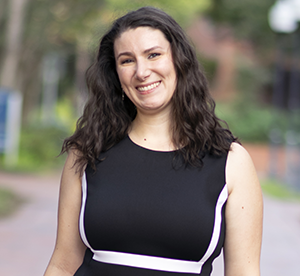
Arianne Boileau is an Assistant Professor of Archaeology in the Department of Sociology and Anthropology, Mount Royal University. Her research examines human-environment interactions in Mesoamerica using zooarchaeology, taphonomy, biomolecular and geochemical analyses, and ethnohistory. She has participated in archaeological projects in Belize, Mexico, France, and Canada, and analyzed faunal remains from these countries, as well as Guatemala, Peru, and the southeastern United States. Through her interdisciplinary work, Boileau uses isotope geochemistry to investigate the captive management and trade of animals by Indigenous groups in Mesoamerica, ancient DNA to investigate the impact of human activity on the genetic diversity and structure of freshwater turtles, and Zooarchaeology by Mass Spectrometry (ZooMS) to help identify zooarchaeological reptilian and bird remains. Since 2022, she has served as the Research Director for the Canadian Latin American Archaeology Society (CLAAS).
Vana Orfanou, MSCA Postdoctoral Fellow, Ludwig Maximilian University (LMU) Munich, Schellingstrasse 12, 80799 Munich, +49 (0)89-2180-5360;
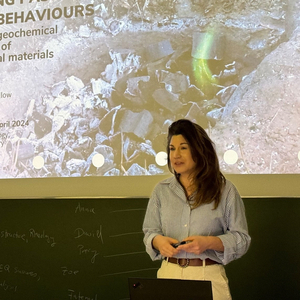
Vana’s research focuses on studying past technologies through the analytical examination of archaeomaterials, with a particular emphasis on archaeometallurgy. She has worked with materials spanning a wide chronological and geographical scope, from the Bronze Age to Medieval times, across northern and southeastern Europe, the eastern Mediterranean, and western Asia. Much of Vana’s work has dealt with materials from Greece, which has led to a close association with the Hellenic Society for Archaeometry (HSA). Since its founding in 1982, the HSA has been the largest professional association of archaeological scientists in Greece, with members both within and outside Greece. The HSA has also actively supported the journal Archaeological and Anthropological Sciences since its foundation in 2009.
Professor Renaud Joannes-Boyau, Faculty of Science and Engineering, Southern Cross University, Military Rd., Lismore, New South Wales, 2480, Australia;
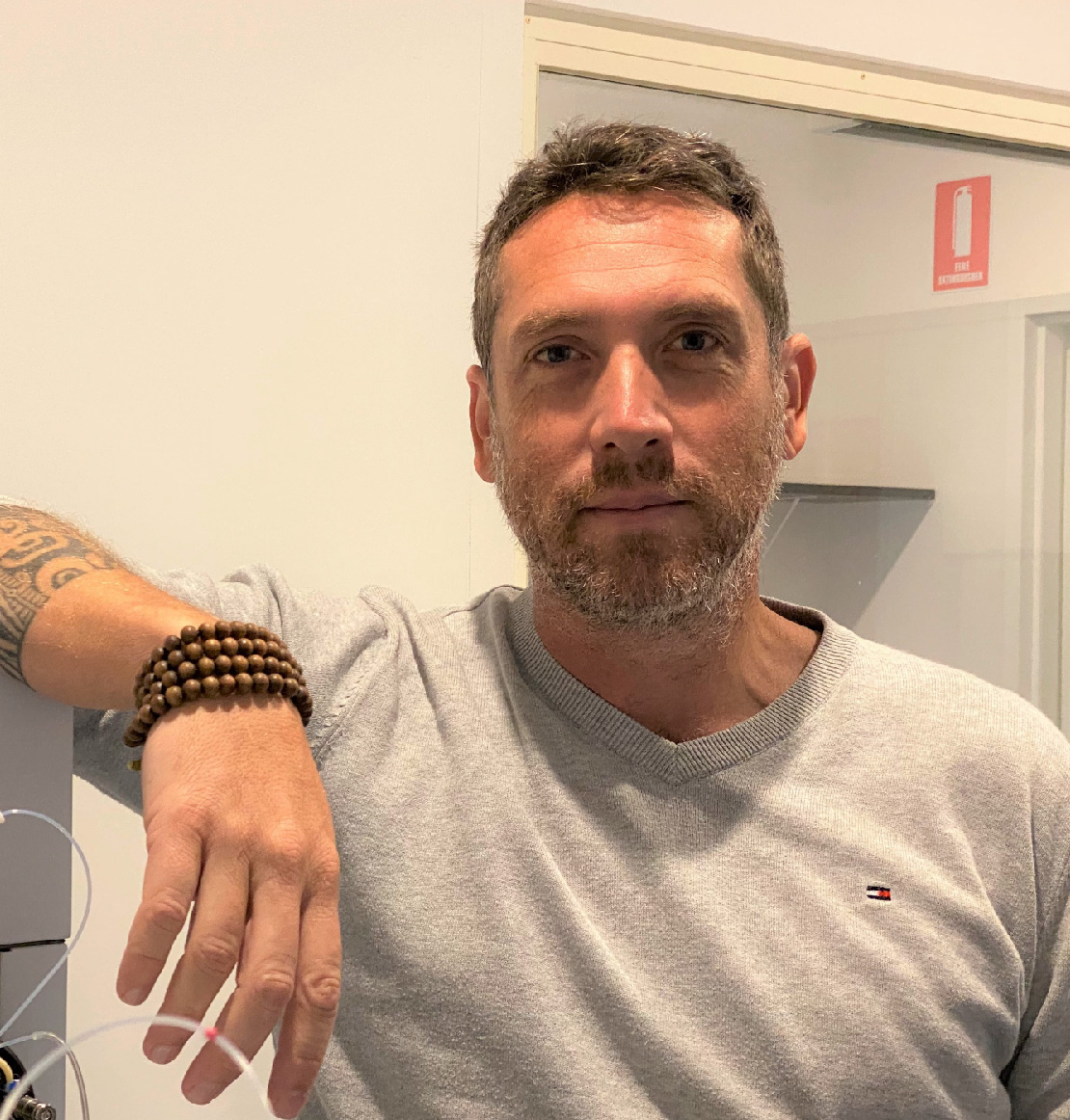
Renaud Joannes-Boyau is Professor of Geochronology and (Archaeo)geochemistry at the Faculty of Science at Southern Cross University (https://researchportal.scu.